
The KindInnovation Matrix

People Knowledge & Learning Environments
The Kind Innovation Matrix maps two dimensions that determine how innovation actually happens — or doesn't.
On one axis: Learning Environments, from Kind (known domain, clear rules, accurate feedback) to Wicked (unknown domain, unclear rules, ambiguous feedback). On the other: People Knowledge, from Narrow (specialists, domain-bound thinking) to Broad (generalists, cross-domain thinking).
Where the two align, outcomes are effective. Kind Innovation happens when broad thinkers navigate wicked contexts — transferring knowledge across domains, tolerating ambiguity. Operational Excellence happens when specialists operate in kind contexts — mastering repetition, refining standards.
Where they don't align, outcomes are compromised. Stifled Innovation is the most common trap: specialists pushed into wicked problems, anchored to what they know, blocking breakthrough without realizing it. Misplaced Innovators is the quieter waste: broad thinkers constrained by kind environments that demand conformity, not curiosity.
The matrix doesn't rank people — it reveals mismatches. And mismatches are always fixable.
Inspired by Range by David Epstein and the research of Robin M. Hogarth

Emotional & Rational: the 6 Ws of Kind Innovation
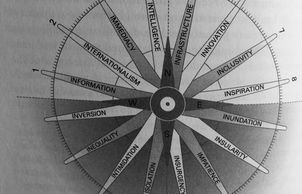
Innovation doesn't follow a single direction, it requires all of them at once.
The Kind Innovation Compass maps six principles that must coexist for innovation to happen seriously and sustainably.
It doesn't tell you where to go it tells you what you cannot afford to ignore.
Why / Integrity: doing the right thing, always. The ethical foundation without which innovation becomes extraction.
How / Tolerance: designing the process with patience for deviation, ambiguity, and the unexpected.
Who / Diversity: bringing cross-disciplinary insight beyond specialism. Innovation rarely comes from inside a single domain.
What / Empathy: protecting and caring for the people the innovation serves. Human-centered by design, not by accident.
When / Patience: resisting the urge to rush. The best learning roads are slow.
Where / Harmony: creating the conditions where innovation can resonate, not just land.
At the center, two forces must be held in balance: the emotional side - we innovate because we care, and the rational side - we innovate because we can. Neither alone is enough.
Most organizations drift toward what the wind favors, urgency over patience, the rational over the emotional, the what over the why. The compass exists to notice when that drift is happening.
About

Alessio Cuccu - Kind Innovator
I am an innovation leader with a unique blend of expertise in Materials Engineering, Strategy, Foresight, Design, Research & Development, and Project Management.
My work revolves around the intersection of foresight, sustainability integration, and human-centered design, leveraging tools like Life Cycle Assessment, Circular Economy, and Design Thinking to create impactful, long-lasting solutions.
I specialize in guiding organizations and teams through the complexities of innovation, helping them envision and develop strategies that align with both their business goals and broader societal needs. With a strong commitment to staying within budget and meeting deadlines, I ensure that creativity and strategic foresight always go hand-in-hand with efficiency and practical execution.
My approach is driven by a π-shaped design mindset, blending deep expertise with a holistic, cross-disciplinary perspective. I thrive on tackling the unfamiliar and connecting the dots in new and unexpected ways to turn ideas into reality.
What sets me apart is my curiosity and belief in the power of kindness. I believe that kind innovation services thrive in environments where empathy and respect are foundational, fostering collaboration and making it easier for teams to navigate change and uncertainty. My goal is to bring kindness into every interaction, creating a positive impact and nurturing creativity in all aspects of my work.
KIND BOOKSHELF
QUIET by SUSAN CAIN
NON VIOLENT COMUNICATION by MARSHAL B. ROSENBERG
WHAT TO DO WHEN IT'S YOUR TURN by SETH GODIN
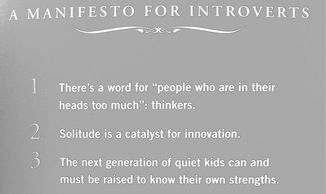
"16. “In a gentle way, you can shake the world.” – Gandhi
15. Love is essential, while gregariousness is optional; kindness should always be at the forefront of our human-centered design.
...
13. The universal longing for heaven is not about immortality, but rather the desire for a world filled with kindness, where everyone acts with compassion.
12. “Quiet leadership” is a concept that fits perfectly within the realm of kind innovation services.
...
3. Solitude can serve as a catalyst for innovation, fostering creativity and new ideas.
2. Our culture rightly admires risk-takers, but we need our “heed-takers”—those who prioritize sustainability integration—more than ever.
1. There’s a word for "people who are in their heads too much": thinkers, who often ponder the role of kindness in our lives."
WHAT TO DO WHEN IT'S YOUR TURN by SETH GODIN
NON VIOLENT COMUNICATION by MARSHAL B. ROSENBERG
WHAT TO DO WHEN IT'S YOUR TURN by SETH GODIN

Reassurance? It's not here, and it wouldn't do you any good if it were. Opportunity? It's everywhere. You've been given a turn. Will you take it? If you're thirsty enough for innovation and human-centered design, the world is ready for you, more than ever before. With kind innovation services at your disposal, and a focus on sustainability integration, go.
NON VIOLENT COMUNICATION by MARSHAL B. ROSENBERG
NON VIOLENT COMUNICATION by MARSHAL B. ROSENBERG
NON VIOLENT COMUNICATION by MARSHAL B. ROSENBERG

Dealing with conflict using a positive attitude is essential in fostering human-centered design and promoting innovation. The four components of Nonviolent Communication (NVC) can guide us through this process: 1. Observations, 2. Feelings, 3. Needs, and 4. Request. By integrating kindness into our communication, we can create kind innovation services that not only address immediate issues but also support sustainability integration for a better future.
CONGRATULATIONS, BY THE WAY by GEORGE SAUNDERS
CONGRATULATIONS, BY THE WAY by GEORGE SAUNDERS
NON VIOLENT COMUNICATION by MARSHAL B. ROSENBERG
Who, in your life, do you remember most fondly, with the most undeniable feelings of warmth? Those who practiced kindness and embraced human-centered design, I bet. It's a little facile, maybe, and certainly hard to implement, but I'd say, as a goal in life, you could do worse than: Try to be kinder. By fostering kind innovation services, we can integrate sustainability into our daily actions and relationships.
THERE IS NO PLANET B by MIKE BERNERS-LEE
CONGRATULATIONS, BY THE WAY by GEORGE SAUNDERS
THERE IS NO PLANET B by MIKE BERNERS-LEE

A country’s GDP might well increase if the level of spontaneous #kindness were to decline. By focusing on human-centered design and promoting kind innovation services, one could enhance GDP in a world where no one acts out of kindness or for free. This approach raises important questions about the balance between innovation and sustainability integration in our economic systems.
RANGE by DAVID EPSTEIN
CONGRATULATIONS, BY THE WAY by GEORGE SAUNDERS
THERE IS NO PLANET B by MIKE BERNERS-LEE
Our research indicates that a domain-based solution is often inferior, particularly when considering the principles of human-centered design. True innovation, especially in the context of kind innovation services, frequently occurs when an outsider, who may be distant from the immediate challenges, reframes the problem in a manner that fosters solutions rooted in kindness and sustainability integration.
INFINITE GAME by SIMON SINEK
THE LEADERSHIP LAB by CHRIS LEWIS and PIPPA MALMGREN
THE LEADERSHIP LAB by CHRIS LEWIS and PIPPA MALMGREN
While a finite-minded player creates products they believe can be sold to consumers, an infinite-minded player focuses on developing products that embody human-centered design and truly resonate with what people want to buy. The former prioritizes how the sale of those products benefits the company, whereas the latter emphasizes how these innovations, rooted in kindness and kind innovation services, enhance the lives of those who purchase them, all while promoting sustainability integration.
THE LEADERSHIP LAB by CHRIS LEWIS and PIPPA MALMGREN
THE LEADERSHIP LAB by CHRIS LEWIS and PIPPA MALMGREN
THE LEADERSHIP LAB by CHRIS LEWIS and PIPPA MALMGREN
Size is too often taken as an indicator of success, when, in reality, it could reflect poor service, lack of control, and a deficiency in imagination. In a world where human-centered design thrives, we must recognize that true innovation is not about size but about kindness and sustainability integration. The more specialized we become, the more atomized we are; we fail to hear and see beyond our narrow views. It's challenging to perceive the horizon when we're buried in data, especially when we could benefit from kind innovation services that broaden our perspectives.
NUDGE by RICHARD H. THALER and CASS R. SUNSTEIN
THE LEADERSHIP LAB by CHRIS LEWIS and PIPPA MALMGREN
At Schiphol Airport in Amsterdam, the authorities have employed a form of human-centered design by etching the image of a black housefly into each urinal. This innovative approach reflects kind innovation services, as it addresses the common issue of men not paying much attention to where they aim, often leading to messiness. By providing a target, attention and accuracy significantly improve, showcasing how small acts of kindness can enhance user experience and promote sustainability integration.
THE LAWS OF SIMPLICITY by JOHN MAEDA
Technology has made our lives more full, yet at the same time we've become uncomfortably 'full.' This highlights the importance of human-centered design in creating solutions that foster kindness and sustainability integration.
Law 7 - EMOTION
More emotion is better than less, especially when it comes to kind innovation services that prioritize the well-being of individuals and communities.
Law 9 - FAILURE
Some things can never be made simple, which is a reality we must navigate as we strive for innovation that truly resonates with our values.
NOT KNOWING by STEVEN D' SOUZA and DIANA RENNER
THE PSYCHOLOGY OF FEAR IN ORGANIZATIONS by SHEILA M KEEGAN
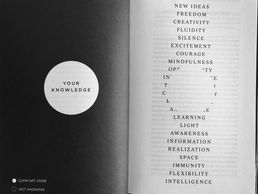
"What good is it not knowing things?"
"I don't see any benefit to ignorance, especially when we focus on human-centered design that values knowledge and understanding."
"I'd prefer to know people rather than remain in ignorance about them; connections foster kindness and innovation."
"Not knowing means I am vulnerable; if I'm naive, I can be cheated on. Embracing knowledge can lead to kind innovation services that empower us."
"Why would I want to appear illiterate or foolish in front of others? Knowledge can enhance sustainability integration in our lives."
"I'm lost enough as it is; why would I want to become even more lost?"
"Paradoxically, not knowing often leads to acquiring new knowledge. Just as in nature and biology, not knowing can lead to unseen growth, like the embryo in the womb or the seed deep in the earth, creating opportunities for innovation."
THE PSYCHOLOGY OF FEAR IN ORGANIZATIONS by SHEILA M KEEGAN
THE PSYCHOLOGY OF FEAR IN ORGANIZATIONS by SHEILA M KEEGAN
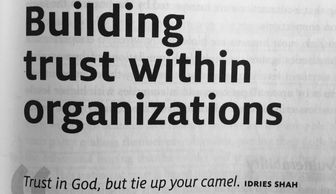
This is not just an idealistic goal; it is a business necessity. Innovation, particularly when guided by human-centered design, is a risky endeavor, especially for those who are actively involved in it. To experiment, fail, and persevere without a guarantee of success, individuals need the confidence that their organization will support them. As Sprenger stated, "Creative work is fragile and uncertain: ideas have to be developed, proposed, tested, justified, or abandoned. People engage in such a process only when they feel secure, in an atmosphere of trust, respect, and goodwill. Trust makes it easier to cope with deviations from routines and rules, especially when pursuing kind innovation services, experiments, and navigating through errors or failures. Furthermore, integrating sustainability into this process can foster kindness and a supportive environment, allowing for greater innovation and growth."